Home Page Strabismus Course Strabismus Books Strabismus Videos

Strabismus Lectures Case of the week E Consultation Contact me


Case of the week 171  ( May 2014 )
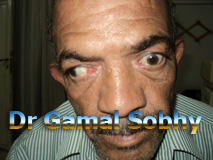
XT and Hypotropia of the Blind eye


61 years old patient has an outward deviation of the Rt eye many years ago, he denies any complaint of diplopia .
He is diabetic and hypertensive. The pupil of the Rt eye is RRR. Fundus examination shows normal fundus. CT brain and orbit shows no significant data.
VA OD 6/60       OS 6/12


 See video of this patient


Sensory exotropia occurs as a result of unilateral visual impairment such as anisometropia, unilateral aphakia and unilateral organic causes. The exotropia is unilateral and involves the amblyopic ( blind ) eye.

Treatment of sensory XT is directed toward improving the cosmetic appearance by means of surgical correction since, in most instances, the very nature of sensory exotropia precludes restoration of binocular function.

An exception to this is children with unilateral congenital or traumatic cataracts of postnatal development. In such patients, the graual onset of an exotropia heralds disruption of fusion, and cataract surgery should be performed without delay, followed by contact lens correction, occlusion treatment for the amblyopia, and eventually by strabismus surgery. The longer the deviation is allowed to persist, the less likelihood there is of binocular vision being restored after successful cataract surgery, especially in adults with acquired cataract When the patient is blind in one eye and therapy is aimed only at improving the cosmetic appearance.

However, most patients require surgery, and an operation should not be discouraged because of the remote chance that the eye may eventually straighten spontaneously or even become exotropic. If that occurs, additional surgery can be performed. There is no need for a patient to go through adolescence with a severe cosmetic handicap that will invariably have a negative psychological effect.

For me I prefer to operate on the deviated blind eye by a recession of the lateral rectus muscle which may be combined with resection of the medial rectus muscle. The surgical result in sensory exotropia is less predictable than when visual acuity is normal in each eye, and adjustable sutures are helpful in improving the alignment postoperatively. Even though surgical alignment of a sensory deviation may create a stable result in many patientsxthe esotropia may recur or a consecutive esotropia may develop years after the first operation. The surgeon is advised to inform patients of this possibility.


الموقع المصري للحول وامراض الجهاز الحركي للعين

The Egyptian Site of Strabismus & Oculomotor Disorders